Welcome to OrOgins
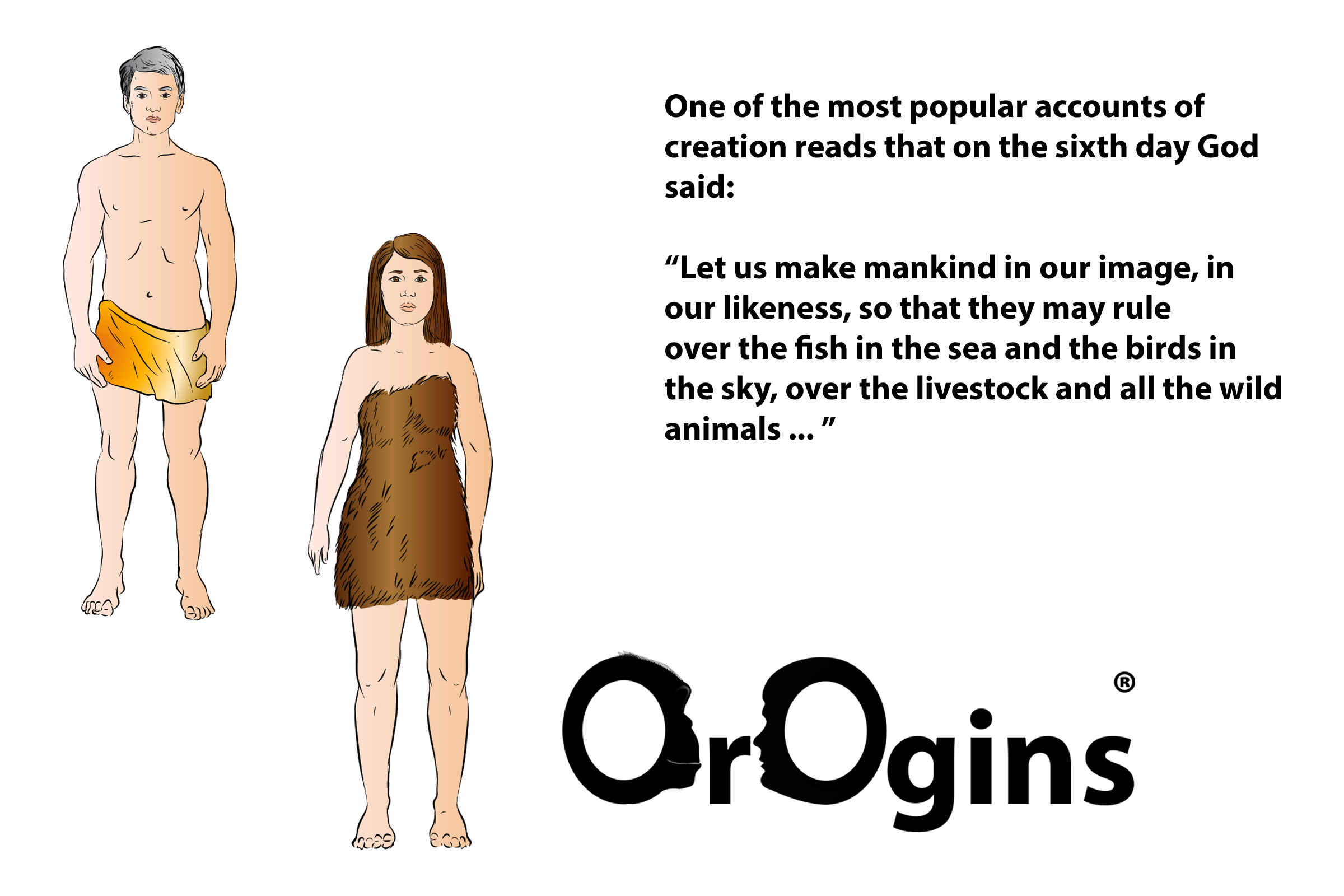
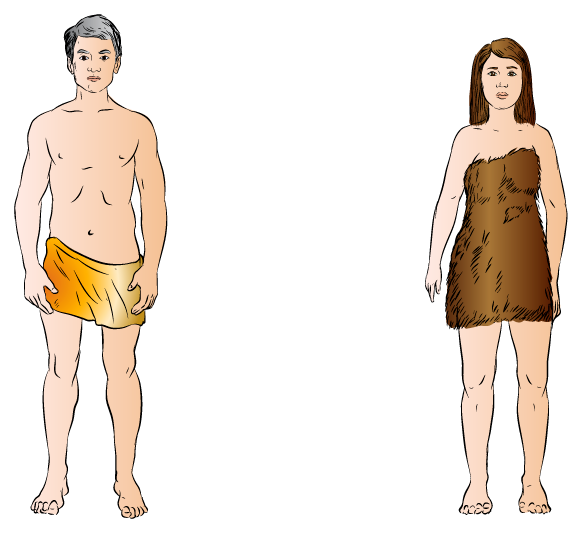
One of the most popular accounts of creation reads that on the sixth day God said:
“Let us make mankind in our image, in our likeness, so that they may rule over the fish in the sea and the birds in the sky, over the livestock and all the wild animals …”
Day 1: Creation of Light and Darkness
God created light and separated it from the darkness. (Genesis 1:3-5)
Day 2: Creation of the Sky and Separation of Waters
God created an expanse (vault or firmament) to separate the waters below from the waters above. (Genesis 1:6-8)
Day 3: Creation of Land, Seas, and Vegetation
God gathered the waters together, creating dry land (earth) and seas. God caused the earth to bring forth vegetation, plants, and trees. (Genesis 1:9-13)
Day 4: Creation of Celestial Bodies
God created the sun, moon, and stars to serve as lights for the earth. (Genesis 1:14-19)
Day 5: Creation of Sea Creatures and Birds
God created sea creatures and birds, blessing them to be fruitful and multiply. (Genesis 1:20-23)
Day 6: Creation of Land Animals and Humans
God created various land animals, each according to its kind. God created humans, male and female, in His own image, giving them dominion over the earth and all living creatures. (Genesis 1:24-31)
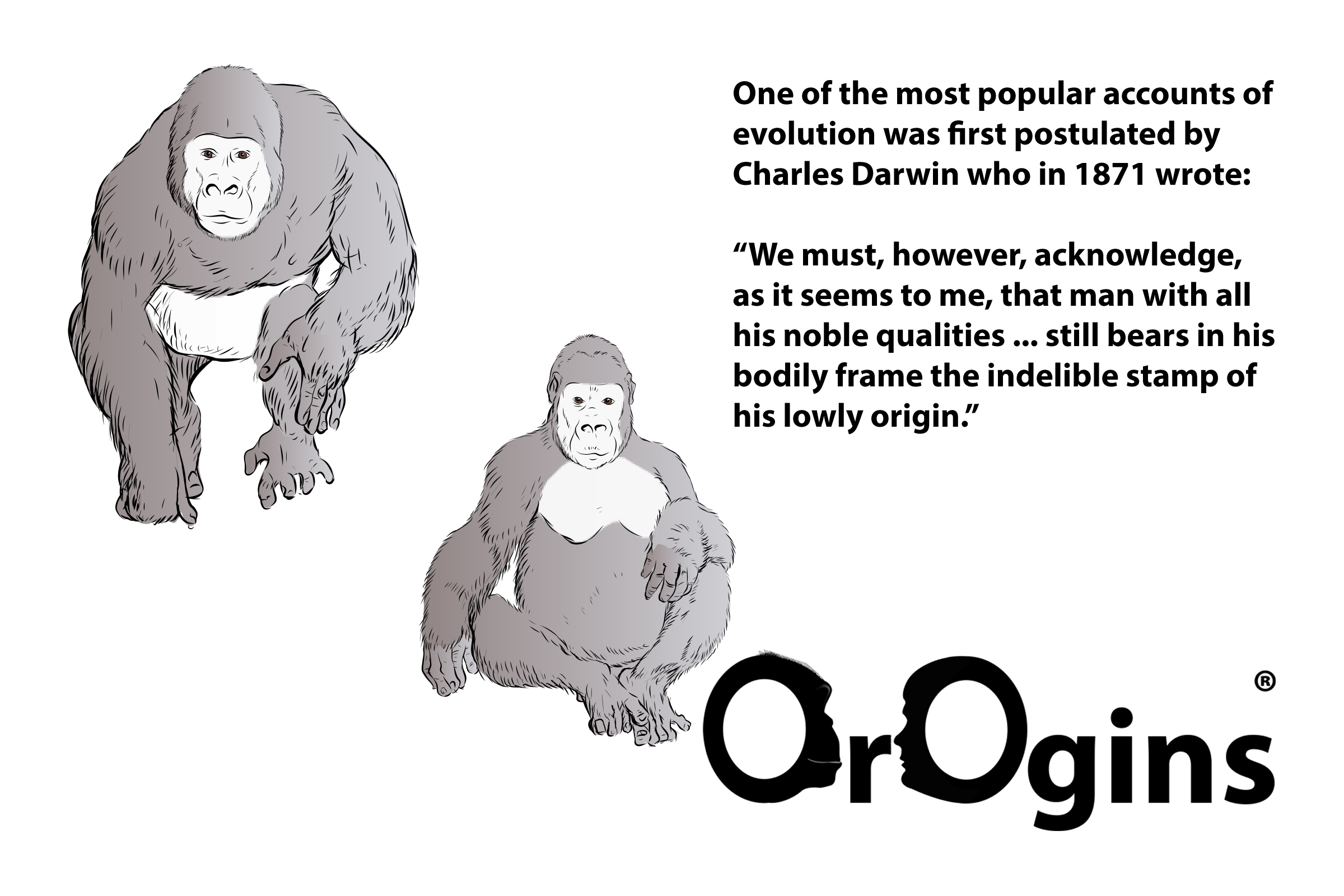
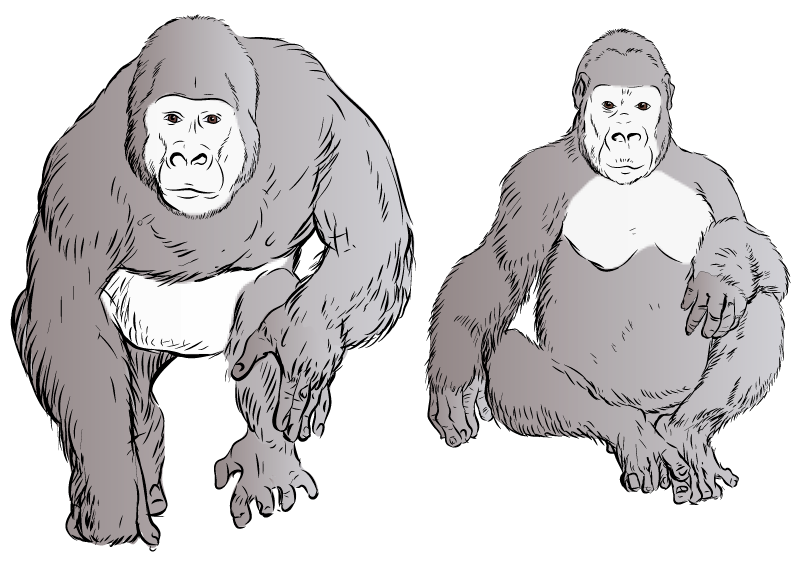
One of the most popular accounts of evolution was first postulated by Charles Darwin who in 1871 wrote:
“We must, however, acknowledge, as it seems to me, that man with all his noble qualities … still bears in his bodily frame the indelible stamp of his lowly origin.”
Around 6 - 7 million years ago
Around 6 million years ago humans diverge from primates. These early ancestors of humans lived in the forests of Africa.
Around 4 - 5 million years ago
The hominid lineage split from the apes. The australopithecines were bipedal (walking on two legs) and showed some characteristics of both apes and humans. The most famous fossil of this group is "Lucy," a specimen of Australopithecus afarensis.
Around 2 - 3 million years ago
The genus Homo emerges. These early Homo species had larger brains and more advanced tool-making abilities. Homo habilis, for example, is known for its use of stone tools.
Around 1 - 2 million years ago
Homo erectus is believed to be the first hominid to have migrated out of Africa and spread to other parts of the world. They had a larger brain size and more sophisticated tools.
Around 400,000 - 200,000 years ago
Homo sapiens (humans) emerge in Africa. This period saw the development of more advanced tools, art, and symbolic expression.